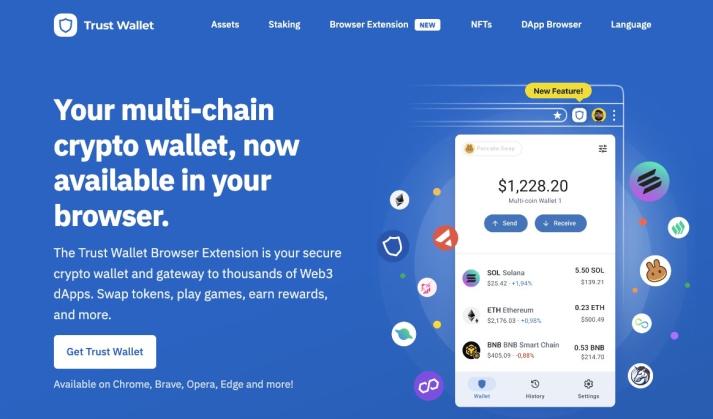
Trust Wallet – Your Complete Guide to Secure, Decentralized Crypto Management
Trust Wallet is one of the most popular decentralized wallets in the cryptocurrency ecosystem—known for its simplicity, speed, versatility, and full control over private keys. As the official wallet of Binance, Trust Wallet allows users to store, send, receive, and trade thousands of cryptocurrencies across multiple blockchains—all while keeping ownership of their private keys.
This comprehensive 1500-word guide will walk you through everything you need to know about Trust Wallet: what it is, how it works, how to set it up, its features, security practices, Web3 integrations, and how to make the most of your decentralized crypto experience.
Introduction: What Makes Trust Wallet Unique?
Trust Wallet stands out because it delivers decentralization, privacy, and complete user control—all packed into a clean and intuitive mobile interface.
Unlike centralized exchanges, Trust Wallet does not hold your private keys, account data, or cryptocurrency. Instead, you maintain full ownership of your assets through your recovery phrase.
Key advantages include:
Decentralized ownership: You are always in full control of your keys.
Multi-chain support: Access Bitcoin, Ethereum, BNB Chain, Solana, Polygon, and more.
Built-in DApp browser: Interact directly with DeFi platforms, NFT marketplaces, and Web3 apps.
User-friendly interface: Suitable for beginners yet powerful enough for advanced users.
Staking and earning tools: Grow your crypto through staking mechanisms directly inside the wallet.
Trust Wallet functions as a powerful all-in-one solution for securely managing your decentralized assets.
Step 1: Getting Started With Trust Wallet
Trust Wallet is available on both Android and iOS. Make sure you download it only from the official Apple App Store or Google Play Store to avoid fraudulent copies.
Installation Steps
Search Trust Wallet in your device’s app store.
Download and install the official app.
Launch the app and choose Create a New Wallet or I Already Have a Wallet if restoring.
Trust Wallet does not require registration, email access, or personal information. This aligns with decentralized principles, offering privacy and security from the start.
Step 2: Creating a New Wallet
When creating a new wallet, you will be prompted to generate your Recovery Phrase—a set of 12 words that serve as the master key to your wallet.
Important Reminders About Your Recovery Phrase
Write it down on paper—never store it digitally.
Do not share it with anyone, ever.
Trust Wallet will never ask for your recovery phrase, neither will support agents, websites, or apps.
Anyone with your recovery phrase can access your wallet and funds.
After writing down the phrase, the app will ask you to re-enter the words in the correct order to verify accuracy. This ensures the phrase is recorded properly.
Step 3: Understanding the Trust Wallet Interface
Once your wallet is set up, you’ll see the main dashboard displaying supported assets, balances, and quick navigation options.
Key Components of the Interface
Wallet Tab: Displays your assets, balances, and portfolio value.
Discover Tab: Explore staking options, tokens, and blockchain tools.
Browser (DApp Browser): Access decentralized applications, swaps, NFT platforms, and DeFi protocols.
Settings: Manage wallets, security preferences, notifications, and app appearance.
The interface is designed to make navigation easy while delivering powerful tools for decentralized finance.
Step 4: Adding and Managing Crypto Assets
Trust Wallet supports thousands of coins and tokens across dozens of networks, including:
Bitcoin (BTC)
Ethereum (ETH)
BNB Smart Chain (BNB)
Solana (SOL)
Tron (TRX)
Polygon (MATIC)
Avalanche (AVAX)
XRP
Thousands of ERC-20, BEP-20, and SPL tokens
Adding Tokens Manually
If a token does not appear automatically, you can add it manually by:
Tapping the + icon on the asset screen.
Searching for the token or pasting the contract address.
Enabling the toggle to display it in your wallet.
This flexibility allows users to store almost any token available in Web3 ecosystems.
Step 5: Receiving Cryptocurrency
To receive crypto:
Open Trust Wallet.
Select the asset you want to receive.
Tap Receive.
Copy or share your wallet address.
Always make sure the network matches the sender’s network. Sending tokens on the wrong chain may lead to permanent loss.
Step 6: Sending Cryptocurrency
To send crypto securely:
Select the token you want to send.
Tap Send.
Enter the recipient’s wallet address.
Choose the amount.
Confirm and authorize the transaction.
Trust Wallet will also display transaction fees and estimated confirmation times, depending on the blockchain used.
Step 7: Swapping and Exchanging Crypto
Trust Wallet includes built-in swap features via decentralized exchange (DEX) integrations. These allow users to convert one asset to another without relying on centralized exchanges.
Supported swaps vary depending on the blockchain and available liquidity.
Examples include:
Swapping BEP-20 tokens on PancakeSwap
Swapping ERC-20 tokens via Uniswap
Swapping Solana-based tokens using Solana DEX integrations
Trust Wallet makes these swaps accessible directly in the app or via the built-in DApp browser.
Step 8: Staking and Earning Rewards
Trust Wallet offers staking options for supported blockchains. Staking allows users to earn passive income by helping secure the network.
Popular staking options include:
BNB
Cosmos (ATOM)
Tezos (XTZ)
Solana (SOL)
Tron (TRX)
To stake:
Go to the Discover or Earn section.
Select a staking asset.
Delegate your tokens to a validator.
Rewards accumulate over time and can be claimed at your convenience.
Step 9: Exploring the DApp Browser
One of the most powerful features of Trust Wallet is the built-in DApp browser, especially on Android. (iOS users may need to enable it manually based on Apple’s restrictions.)
The DApp browser allows you to interact with:
DeFi platforms like PancakeSwap, Uniswap, and Aave
NFT marketplaces like OpenSea and Magic Eden
Blockchain games and metaverse platforms
Web3 identity tools
Yield farming protocols
Trust Wallet will automatically connect to the DApp and allow you to sign transactions securely from your mobile wallet.
Step 10: Managing NFTs
Trust Wallet supports NFTs across major blockchains such as:
Ethereum (ERC-721, ERC-1155)
BNB Chain (BEP-721, BEP-1155)
Polygon
Solana
Users can:
View NFT collections
Send and receive NFTs
Connect to NFT marketplaces
Securely store digital art and collectibles
NFTs remain fully owned by the user, since Trust Wallet provides non-custodial private key control.
Step 11: Security Best Practices
To keep your Trust Wallet safe, follow these essential guidelines:
Protect Your Recovery Phrase
Write it on paper, never digitally
Store in a fireproof, waterproof location
Consider using a metal seed storage device
Avoid Phishing Attacks
Trust Wallet will never ask for your seed phrase
Avoid clicking on suspicious links
Verify website URLs before connecting your wallet
Set Additional Security Layers
Enable biometric lock (Face ID or fingerprint)
Use a secure device and OS
Keep your app updated
Your wallet’s security is only as strong as how you protect your recovery phrase and device.
Step 12: Backing Up and Restoring Your Wallet
If you lose your device or uninstall the app, you can restore your wallet using your recovery phrase.
Steps to restore:
Download Trust Wallet.
Tap I Already Have a Wallet.
Enter the 12-word recovery phrase.
Your assets and settings will automatically reload.
Never enter your recovery phrase anywhere except inside the official Trust Wallet app.
Step 13: Troubleshooting Common Issues
Assets Not Showing?
Manually add the token via contract address.
Check blockchain explorer for confirmations.
DApp Browser Missing?
On iOS, Apple sometimes restricts browser features; you may need to enable via trusted instructions or use WalletConnect.
Transactions Failed?
Increase gas fees
Ensure sufficient balance for network fees
Trust Wallet’s help center provides detailed troubleshooting for all common issues.
Final Thoughts
Trust Wallet is far more than a simple cryptocurrency wallet—it’s a complete decentralized ecosystem in your pocket. By combining self-custody, multi-chain support, staking, swaps, NFTs, and Web3 tools, it provides everything crypto users need to take full ownership of their assets.
Whether you're storing Bitcoin for the long term, exploring the DeFi world, collecting NFTs, or interacting with blockchain applications, Trust Wallet empowers you with secure, private, and convenient control over your digital life.